Loyalty Integration
A Little Fuel for Growth
Bringing Kroger Fuel Points to OwnersBox
TEAM
1 Designer
2 PMs
2 Developers
FOCUS
Partnership Compliance
Trust & Clarity
Information Architecture
TIMELINE
2 Weeks
A Loyalty Program, Meets Daily Fantasy Sports.
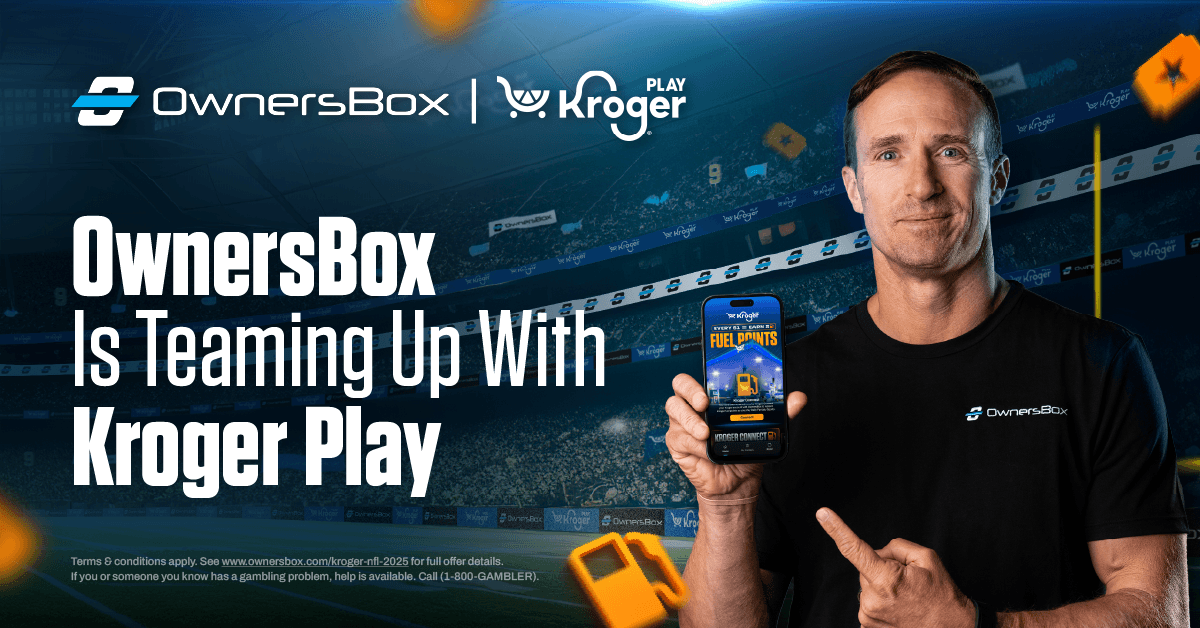
OwnersBox had an opportunity to partner with Kroger and bring its Fuel Points rewards program into the DFS experience.
It was our first external brand partnership, and it came with a few things to figure out. Kroger had established brand and legal requirements, Fuel Points had its own earning rules, and OwnersBox needed to introduce the experience without disrupting its existing gameplay or navigation.
I led the product and design architecture for the integration, turning a fairly complex rewards system into a dedicated experience where users could connect their Kroger accounts, understand how to earn points, and keep track of their rewards.
All within two weeks…
What We Wanted to Achieve
Drive Acquisition
Introduce a new acquisition channel through Kroger-affiliated establishments and encourage account linking.
Build Retention
Give users a tangible reason to return to OwnersBox through real-world rewards.
Partnership Trust
Deliver a compliant, partner-approved experience without disrupting the existing platform.
Three Things Had to Work at Once
The challenge wasn't simply adding a rewards feature. The experience needed to make sense for three different groups, each with their own expectations.
For Users
Connecting an external account requires trust. Users needed to recognize Kroger, understand what they were agreeing to, and know exactly how their activity translated into Fuel Points.
For Kroger
The experience needed to follow established brand guidelines, use approved terminology and imagery, and accurately communicate the program's rules.
For OwnersBox
The integration needed to support acquisition and retention without introducing unnecessary changes to core DFS navigation or gameplay.
The opportunity was to create a self-contained loyalty experience that could satisfy all three without making the underlying complexity the user's problem.
We Had Two Weeks. No Time for Reinventing Loyalty.
With a two-week timeline, I focused on validating established patterns rather than conducting broad exploratory research.
I audited loyalty experiences across retail, airline, and e-commerce platforms, looking specifically at how they communicated account linking, earning mechanics, reward balances, and transaction history.
One pattern stood out…
The strongest loyalty experiences made a clear distinction between earning rewards and tracking what had already been earned.
Users shouldn't have to piece together their reward balance from scattered information. They should be able to understand what they've earned, why they earned it, and when it happened.
This informed the structure of the experience, particularly the decision to introduce a dedicated Fuel Points Activity Log.
Trust Starts Before the First Point Is Earned
Clear Value
Instantly understand how Fuel Points are earned.
Fast Onboarding
Connect a Kroger account in seconds.
Auditability
Access a chronological, trustworthy log of earned points.
Because this was an external account integration, the first interaction mattered.
Users needed to feel confident connecting their Kroger accounts before they could experience any of the rewards.
I designed the entry point as a dedicated Kroger Play experience, accessible by pulling down from the OwnersBox homescreen.
Rather than introducing another destination into the main navigation, this approach kept the integration separate from core DFS functionality while giving the partnership its own space.

Kroger's branding played a major role here. I used approved brand imagery, terminology, and visual guidelines to make the connection immediately recognizable.
The account linking experience also needed clear confirmation states so users understood when their accounts were connected and what happened next.
The goal was to make the partnership feel like a natural extension of the experience, not a third-party feature users had to figure out themselves.
Earning Points Shouldn't Require a Manual.
Kroger Fuel Points have specific earning rules, and translating those rules into a DFS experience required some careful information architecture.
I structured the loyalty hub around three core screens, each answering a different user question.
Account Linking & Eligibility
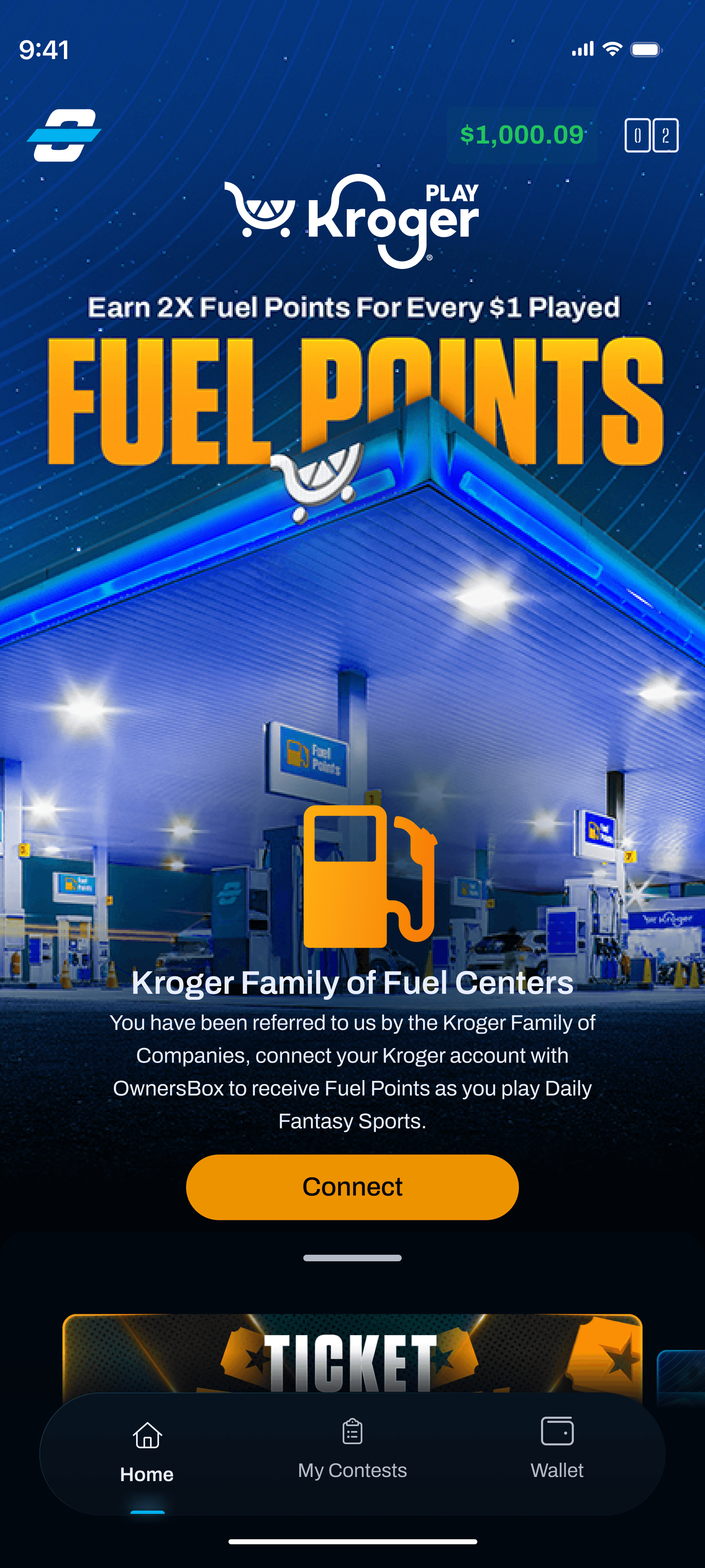
Can I participate, and is my account connected?
The entry experience introduced the Kroger Play partnership, explained the value of connecting an account, and provided clear confirmation states throughout the linking process.
The focus was on making the connection feel recognizable and straightforward, with Kroger's approved branding.
Reinforcing trust from the beginning.
By pulling down the Homescreen of our app users are presented with this Kroger Play screen, encouraging them to connect their Kroger Account.
Clear confirmation states and Kroger-brand was the key focus here.
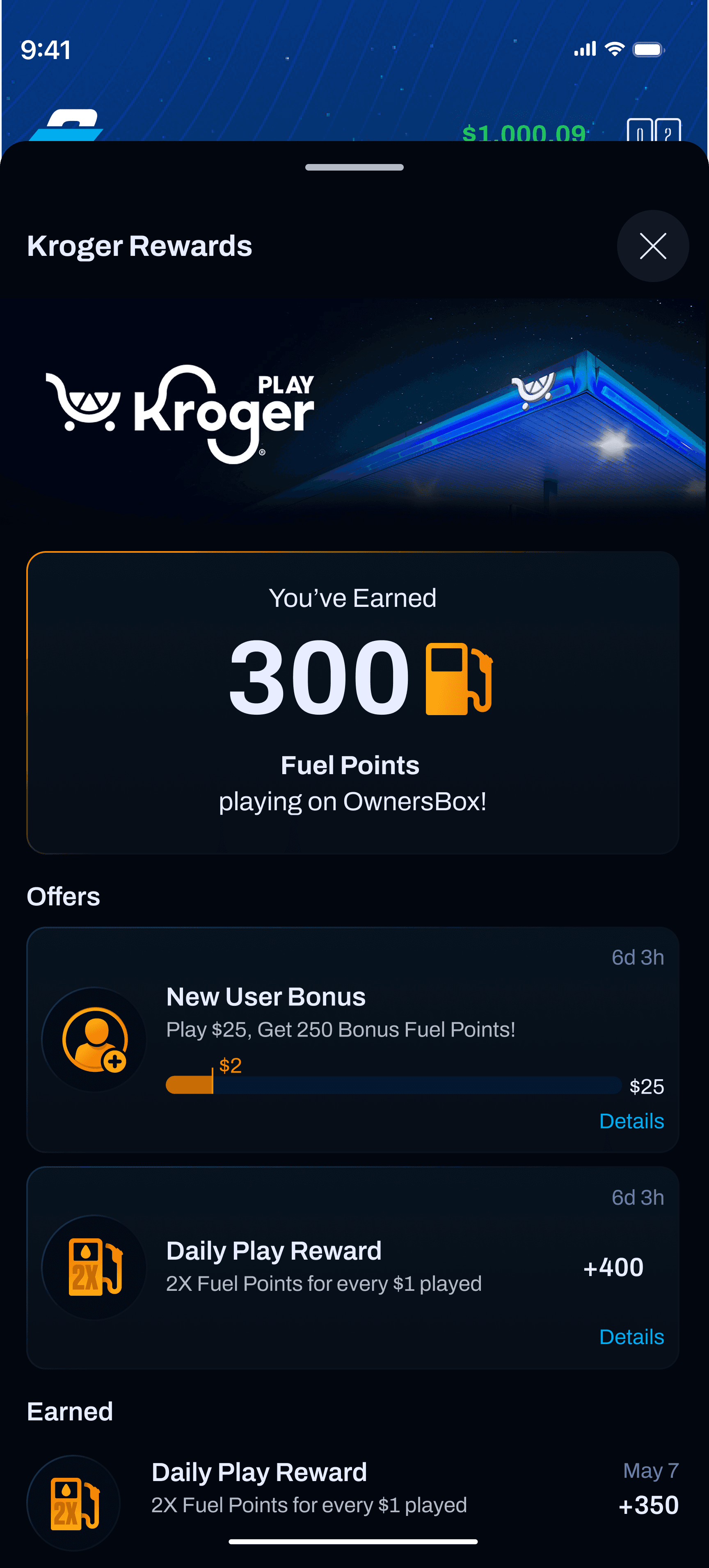
Earn vs. Spend Overview
How do I earn points, and what can I do with them?
I separated the earning mechanics from the reward value to give users a simpler mental model of the program.
Rather than presenting the full set of loyalty rules upfront, the experience organized the information around what users actually needed to understand: what actions earned points and how those points translated into real-world rewards.
The idea was to make the value immediately understandable without oversimplifying the underlying rules.
A simplified mental model translating complex rules into understandable actions.
Fuel Points Activity Log
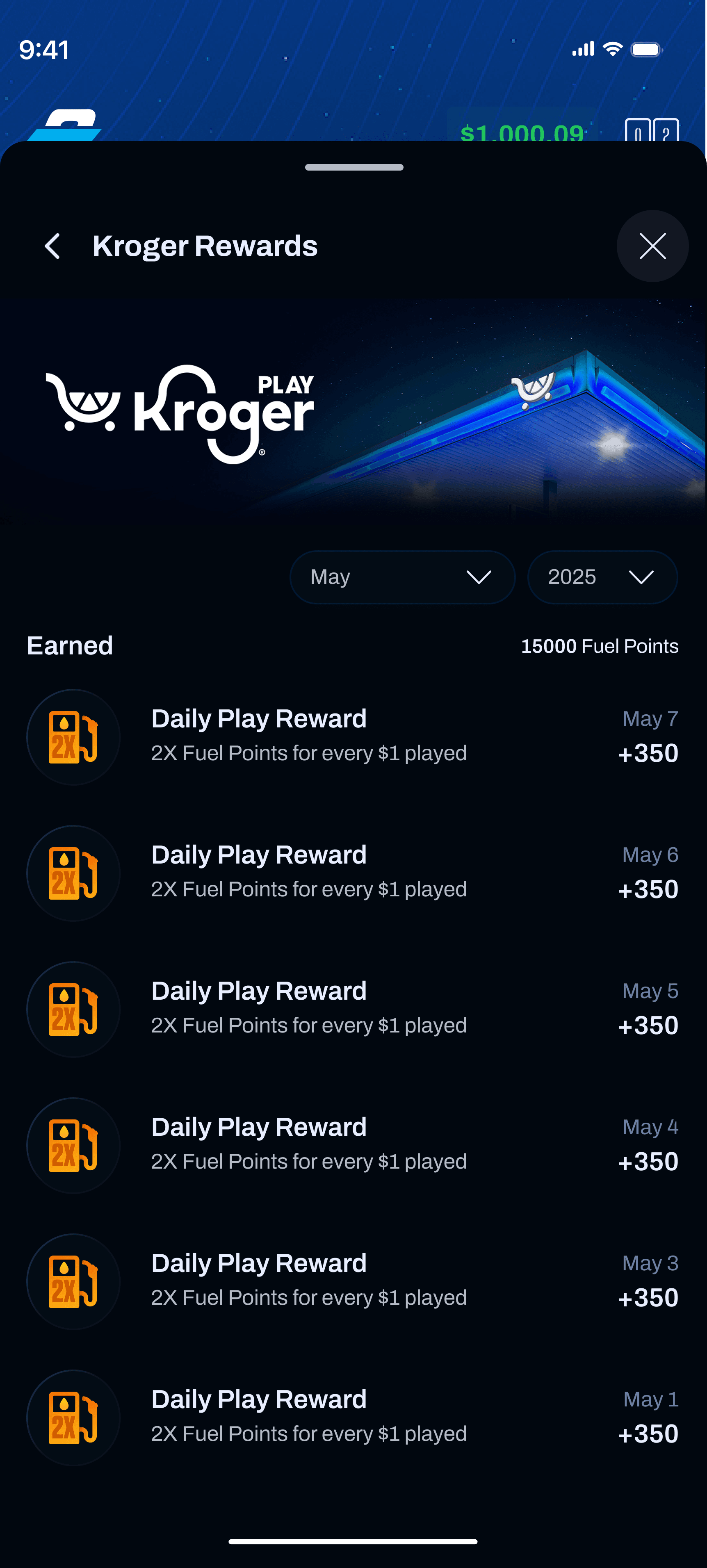
Where did my points come from?
I introduced a chronological activity log to give users a clear record of their earned points.
This was particularly important for a rewards system where users needed to trust that their activity was being tracked accurately.
By making individual earning activity visible, the log provided a more transparent way to understand reward accumulation rather than relying on a single balance number.
A chronological, auditable record of earned points to reinforce trust and transparency.
Getting Kroger's Approval Was Part of the Design
Because this was OwnersBox's first external brand partnership, the design needed to work beyond our internal product team.
I presented the experience directly to Kroger stakeholders, including product and legal teams, walking through the system architecture, interaction logic, and rationale behind the experience.
Every design decision needed to account for the partnership requirements, from approved terminology and imagery to how earning mechanics were communicated.

The designs were delivered in 14 days and received approval with only minor legal adjustments unrelated to the UX logic.
The result was a partner-ready integration that met the requirements without compromising the usability of the experience.
A New Acquisition Channel, and a New Kind of Partnership
The integration launched with the Play $10, Get 1,000 Fuel Points offer in January, introducing a new way for OwnersBox to acquire users through Kroger-affiliated channels.
The early numbers were particularly encouraging.
14 Days from design through delivery of the partner-ready integration…
A Good Partnership Has to Work for Everyone
This project reinforced something I think is easy to overlook when designing partnership experiences: meeting business and legal requirements isn't separate from the user experience.
A feature can be fully compliant and still be confusing. It can look like the partner's brand and still fail to build trust.
The interesting part was finding the balance between the two.
For me, the biggest takeaway was that trust comes from more than visual familiarity. It's also about giving users enough clarity to understand what they're connecting, how the system works, and where their rewards are coming from.
That clarity is what makes a partnership experience feel credible rather than promotional.